Category scope
Confirm the buyer's appliance family, target channel, and service accessory requirements.
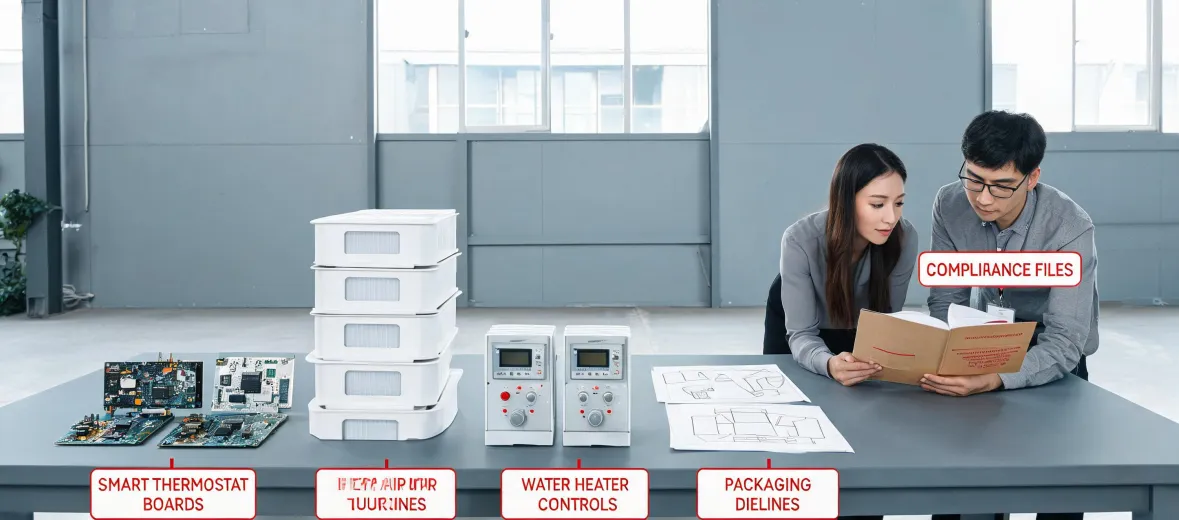
Confirm the buyer's appliance family, target channel, and service accessory requirements.
Align manuals, labels, cartons, compliance notes, and inspection files before quoting.
Separate first shipment needs from replacement filters, controls, fittings, and parts.
Buyer sends market, category, and volume assumptions.
Team maps SKU families and required supporting files.
Commercial reply is prepared with assumptions visible.
Reorder accessories and service documents stay connected.
Honeywell is presented here as a disciplined appliance sourcing brand for buyers who value compact information, stable documentation, and category coverage that can be reviewed quickly. The site does not try to behave like a consumer showcase. It behaves like a procurement surface: every page points buyers toward the information they need before approving a home climate, air quality, water heater, cooking appliance, refrigeration, or small kitchen appliance program. That includes product family scope, accessory planning, packaging expectations, compliance language, warranty documents, and after-sales files.
The company story for this build is intentionally efficient. Large buyers rarely need another decorative brand page; they need confidence that the supplier can keep models, manuals, filters, sensors, cartons, and service parts aligned across markets. The roadmap therefore begins with catalog control. Product families are grouped by buyer workflow rather than by marketing slogans. Climate control buyers can move from thermostats to portable HVAC appliances and humidification accessories. Air quality buyers can evaluate purifier bodies, filter programs, sensor notes, and replenishment cycles. Water-treatment buyers can review water heaters, filtration units, fittings, safety labels, and installation records in a single chain.
The operating model favors short decision loops. RFQs are reviewed against required certification markets, channel packaging, installation language, service expectations, and the buyer's expected reorder rhythm. Internal teams can then prepare cleaner specification replies and avoid scattering answers across emails. The result is a B2B appliance site that feels spare, but not empty: every section carries a practical purpose. It gives distributors, private-label teams, retail buyers, and regional service companies a stable way to discuss exact products without letting the program drift into unclear assumptions.
Ask for the catalog, documentation, and compliance view that fits your selling market.